
Let Them Surprise Themselves: What the Research Says About Kids, Anxiety, and Independence
If you joined us for our recent webinar with Dr. Meredith Elkins — clinical psychologist, co-program director of the McLean Anxiety Mastery Program, and author of the new and powerful book, Parenting Anxiety — you know she has a gift for cutting through the noise with clarity and warmth. And right now, there is a lot of noise to cut through.
Parents today are trying. They are genuinely, deeply trying. But they are doing so while being bombarded with contradictory advice, social media comparison culture, and a constant undercurrent of fear about whether they are doing enough, doing too much, or doing it all wrong. It has never been harder to trust your instincts as a parent — not because parents are less capable, but because the environment around them has become so relentlessly overwhelming.
The data backs this up in a striking way. In August 2024, U.S. Surgeon General Dr. Vivek Murthy issued a formal advisory declaring parental stress a significant public health crisis. Nearly half of all parents report feeling completely overwhelmed by stress on most days — a rate higher than any other adult group. Forty-one percent say their stress levels leave them too depleted to function. The causes are real and systemic: financial pressure, fears about child safety, the youth mental health crisis, and a culture of comparison fed by social media. This isn't a failure of individual parents. It's a society that has left parents without adequate support and then handed them a firehose of often contradictory guidance about what to do next.
Which is exactly why a clear, research-backed, actually doable idea is so worth paying attention to.
One line from Dr. Elkins that stuck with me: uncomfortable is not the same as unsafe. For many parents of anxious kids, really internalizing that distinction is genuinely transformative. She made the point that many parents are providing more support than their child actually needs — or even wants. This isn't a criticism; it comes from love, and it comes from exhaustion, and it comes from a culture that has convinced parents that their child's every discomfort is a problem to be solved. But that instinct, however well-meaning, can quietly chip away at a child's confidence, sending the unspoken message that the world is a place they need to be protected from.
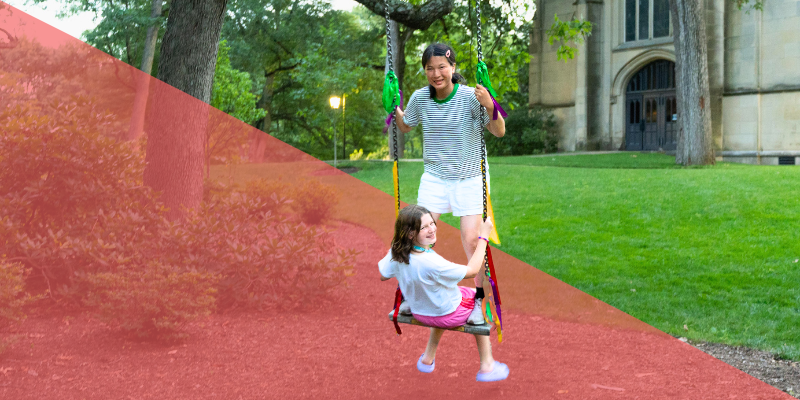
So what's one small, concrete step a parent can take? Dr. Elkins suggests starting here: Ask your child if there's anything they'd like to do more independently. That's it. No pressure, no anxiety-focused framing. Just an open, curious question. As she put it, this takes the anxiety pressure off entirely and reframes the conversation around building confidence. And confidence, she reminds us, doesn't come from nothing — it comes from learning to handle things you didn't know you could handle. From getting the chance to surprise yourself.
This idea lines up beautifully with emerging research from clinical psychologist Dr. Camilo Ortiz, whose work on childhood independence as a treatment for anxiety is turning heads. Dr. Ortiz and his team have developed a short treatment program built around what they call "independence activities" — unstructured, developmentally challenging tasks kids do without adult help. What's fascinating is that these activities don't have to be related to a child's specific fears to reduce anxiety. A 9-year-old afraid to sleep in her own room took the bus to school by herself as her independence challenge. That night, she slept in her own bed for the first time in her life.
The underlying logic is the same whether it comes from Dr. Elkins or Dr. Ortiz: kids need practice navigating discomfort, disappointment, and uncertainty. When we step in too quickly, we inadvertently prevent them from building the very skills — resilience, problem-solving, self-trust — that make anxiety more manageable. And here's something that gets lost in all the noise: giving kids more independence isn't just good for them. Dr. Ortiz's research found it also reduces parental stress and frees up time for parents to actually breathe. In a moment when nearly half of all parents are running on empty, that matters too.
See how EXPLO supports middle schoolers on campus:
Why We Unplug: The EXPLO Technology Policy Explained
The Best Summer Program for Middle School Students Isn’t a Traditional Camp
.webp?width=352&name=blog%20(10).webp)
.webp?width=352&name=blog%20(3).webp)